ServicesSod Installation
Sod Installation in Ocoee
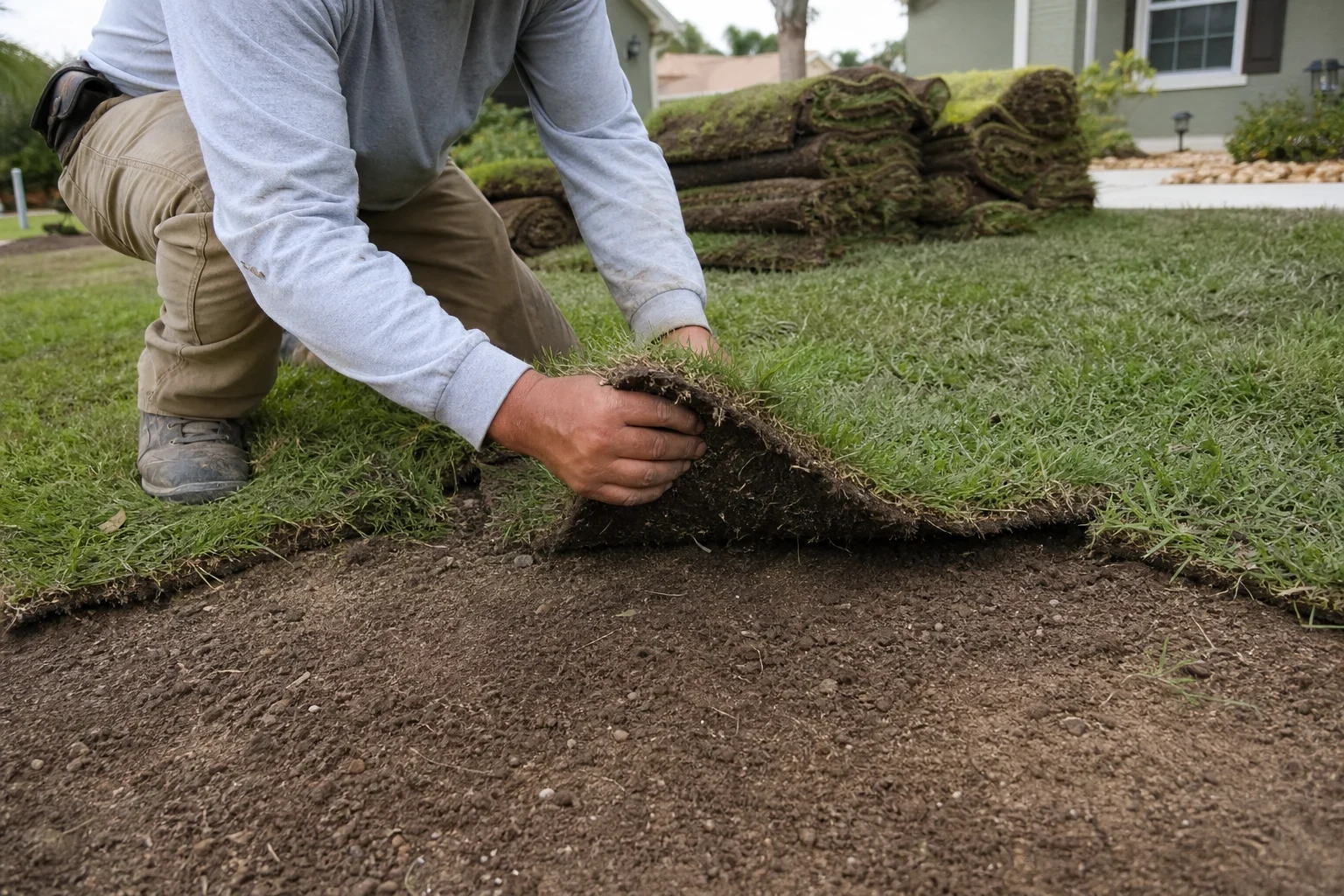
A new lawn only holds up if the ground under it is ready. We remove the old turf, level and grade the soil, check your sprinklers, and lay grass suited to your yard's sun and shade, so it roots fast and doesn't drink more water than it needs.
When new sod is the right call
Some lawns come back with better mowing, feeding and watering. Others are too far gone, with more weeds and bare sand than grass. When that happens, new sod gets you a full, even lawn in a few weeks instead of a season of patching. We'll tell you honestly which situation you're in. If regular lawn care can fix it, we'll say so.
Picking the right grass is the part that saves you money over the years. St. Augustine, zoysia and bahia each handle shade, foot traffic and dry spells differently. Put the wrong one under a live oak or in full sun and you end up overwatering a lawn that keeps thinning anyway.
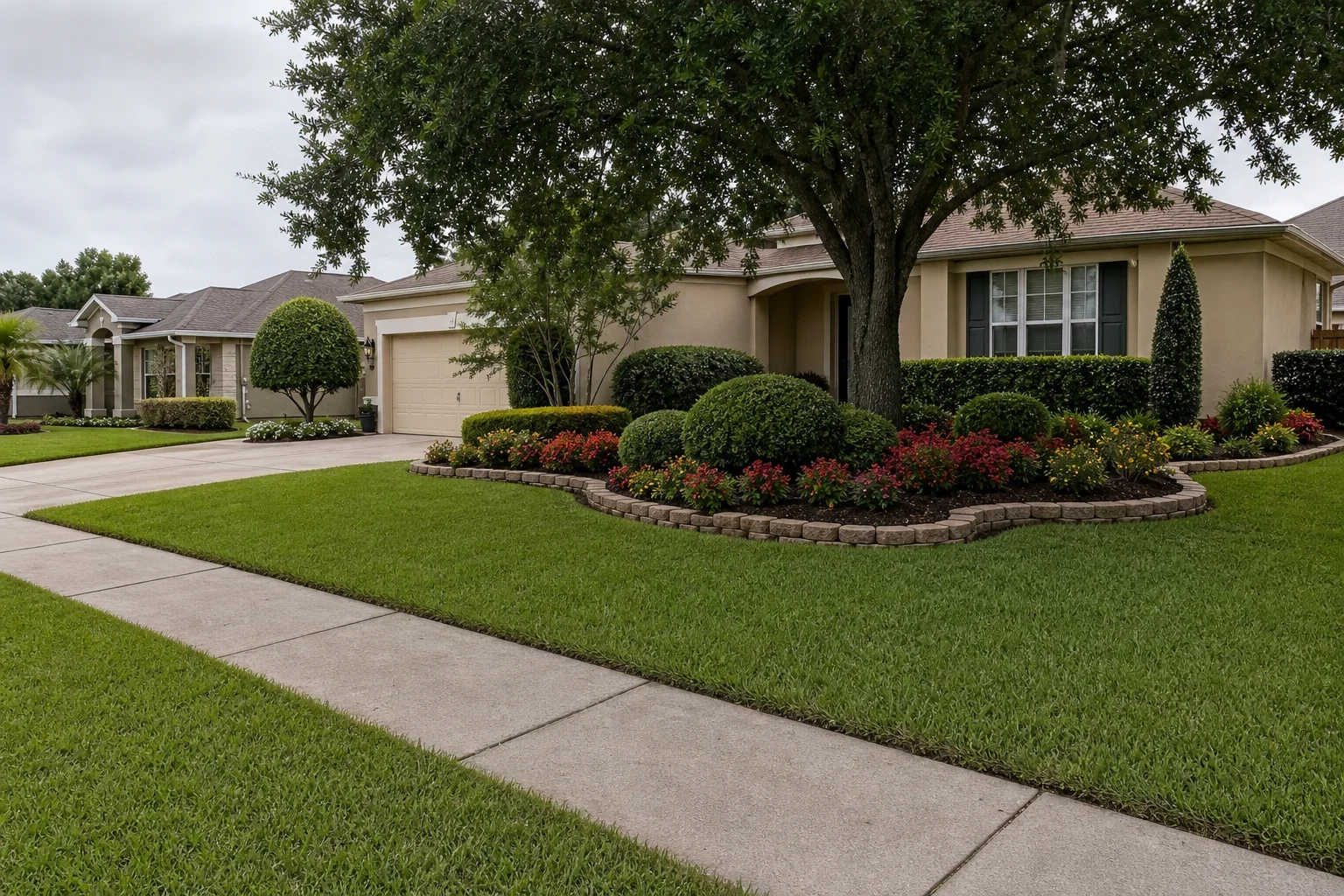
There's a comfort side too. A healthy lawn along the sunny side of your home stays noticeably cooler underfoot than bare sand or rock, and less heat bounces back toward your walls and windows. We grade the soil so rain drains away from the foundation instead of pooling against it.
What your sod installation includes
Grass matched to your yard
We look at how many hours of sun each area gets, where the kids and dogs run, and how your irrigation covers the yard. Then we recommend a variety that fits, and we'll explain why.
Old turf and weed removal
We cut out the existing grass and roots rather than laying new sod on top. Old turf left underneath rots, settles unevenly and gives weeds a head start.
Soil prep and grading
Sandy soil gets loosened, leveled and amended where it needs it. We set the grade so water moves away from your home and low spots stop holding puddles.
Sprinkler coverage check
Before the sod goes down, we run each zone and look for dry corners, broken heads and spray hitting the driveway. Bigger fixes can be handled through our irrigation service.
Tight, staggered installation
Pieces are laid fresh, with seams staggered like brickwork and edges pressed together, then rolled for good soil contact. Gaps at the seams are where new sod dries out first.
Cleanup and a watering plan
We haul off the old turf and leftover pieces and sweep the hard surfaces. You get a simple written schedule for the first few weeks of watering.
Signs your lawn may need new sod
- Bare patches that never close up
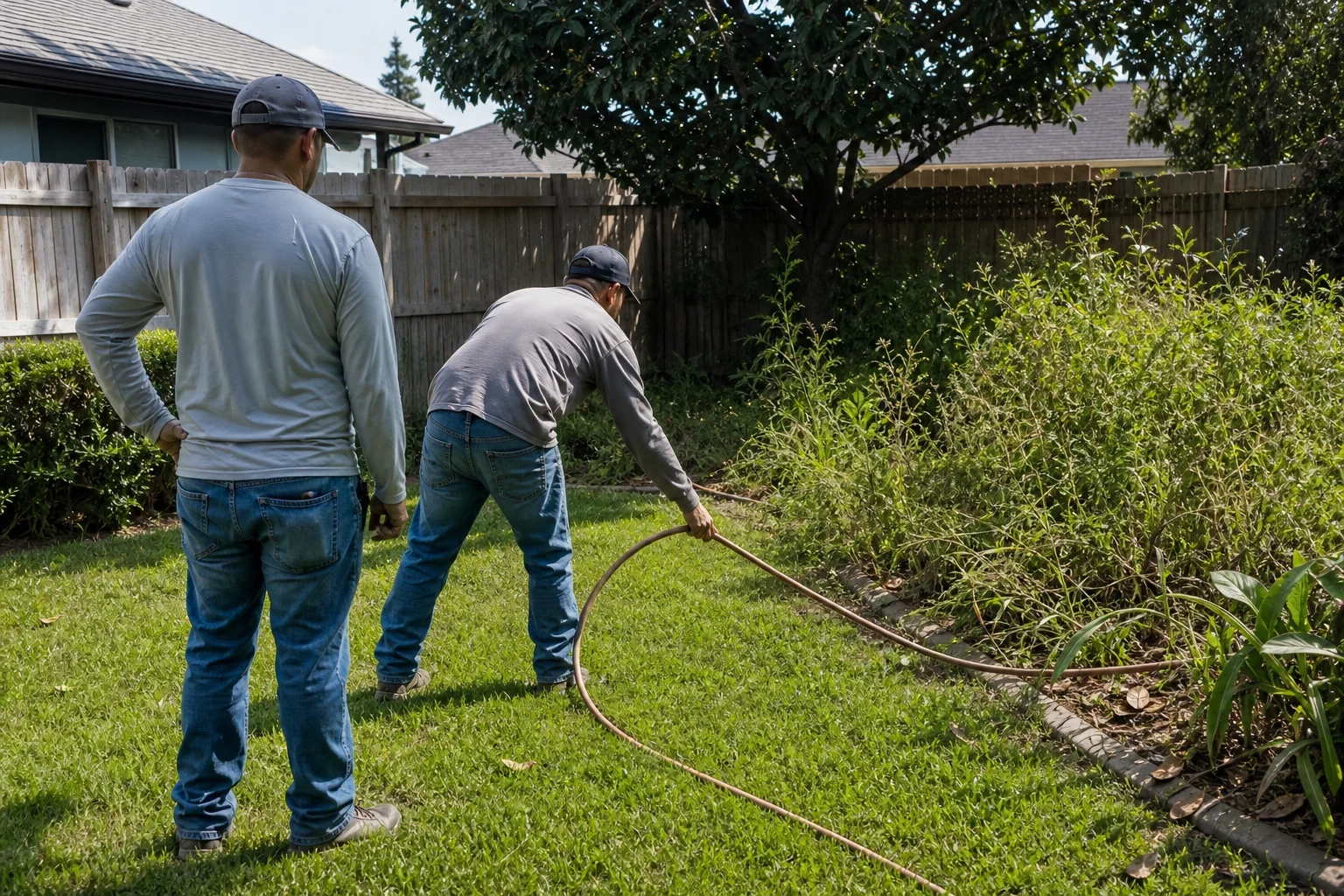
- If thin patches have stayed thin through a full growing season, the grass around them isn't going to close the gap on its own.
- Weeds have taken over
- Once weeds cover more than about half the lawn, treating them leaves you with mostly dirt. Starting fresh is usually cheaper than fighting it year after year.
- Spreading brown or dead areas
- Chinch bug damage and fungus can wipe out large sections of St. Augustine in a summer. After the cause is handled, resodding the damaged areas brings the lawn back together.
- Grass that struggles in shade
- Lawns under mature trees often thin out because the variety needs more sun than it gets. A shade-tolerant grass can fix what extra water and fertilizer can't.
- Sand left after a project
- New construction, a tree removal or stump grinding can leave bare ground behind. Sod covers it quickly and keeps the sand from washing out in a summer storm.
How the work goes, start to finish
- 1
Walkthrough and estimate
We walk your yard with you, measure the areas and look at sun, drainage and sprinklers. You get a free estimate with each part of the job spelled out, so nothing comes as a surprise later.
- 2
Prep day
We remove the old lawn, haul the debris away, then till, level and grade the soil. Sprinkler heads get marked and adjusted so they sit at the right height for the new grass.
- 3
Installation day
The sod is delivered fresh and laid the same day it arrives. We roll it, water it in thoroughly and clean up the driveway and walks before we leave.
- 4
The first few weeks
You follow the watering plan, heavier at first and then tapering off as roots grab hold. If something looks off, give us a call and we'll come back and take a look.
What affects the price of new sod
Most of the cost comes down to how much ground we're covering and how much work it takes to get that ground ready. Your estimate breaks those pieces out so you can see where the money goes. If you'd rather spread a bigger project out over time, we can finance amounts as high as $100,000, with terms anywhere from two to twelve years and no penalty if you pay it off early.
- Square footage
- Sod is priced by the area covered, so the size of the lawn is the biggest single factor.
- Grass variety
- Some varieties cost more per pallet than others. A grass that fits your yard can still save you on water and replacement down the road.
- Removal and soil work
- A lawn that's mostly weeds, with dips, roots or poor drainage, takes more prep than a flat yard with thin grass.
- Irrigation changes
- If zones need new heads or rerouting to cover the lawn evenly, that's added as a separate line.
- Access
- Narrow side gates, fences and backyards with no driveway access mean more carrying by hand, which adds labor time.
Sod installation questions
- What time of year is best for laying sod here?
- Spring through early fall is ideal, while warm-season grasses are actively growing and root quickly. Summer rains help, though we still plan watering carefully in the hottest weeks. Sod can go down in winter, but it roots more slowly and stays dormant-looking until spring.
- Can you lay new sod over my old grass?
- We don't. Old grass and weeds underneath block the new roots from reaching soil and break down unevenly, which leaves soft spots and bumps. Removing them first is what lets the new lawn take hold.
- How soon can we walk on it or mow it?
- Keep foot traffic light for the first two weeks or so. When you gently tug a corner and it doesn't lift, the roots have taken, and that's usually the time for the first mow. We'll show you how to check during the walkthrough.
- How much will I need to water new sod?
- Watering is heavier for the first week or two, then cut back gradually to a normal schedule. Your written plan lists how long to run each zone. Local watering rules can change, so check your current schedule with the county or your water provider before setting the timer.
- Will a new lawn actually help keep my home cooler?
- It helps a little, not a lot. Grass stays cooler than bare sand, rock or pavement, so less heat radiates toward the walls and windows next to it. Pair it with shade trees from a landscape design plan and the difference is easier to feel.
Let's look at your lawn together
We'll walk the yard with you, check sun and drainage, and give you a free estimate with each step spelled out. If your grass can be saved, we'll tell you that too.