ServicesMulch and Beds
Mulch and Bed Care in Ocoee
We clear out tired beds, cut crisp edges and lay fresh mulch or pine straw at a depth that actually works. You get beds that look cared for, hold moisture through the heat and need less water from your sprinklers.
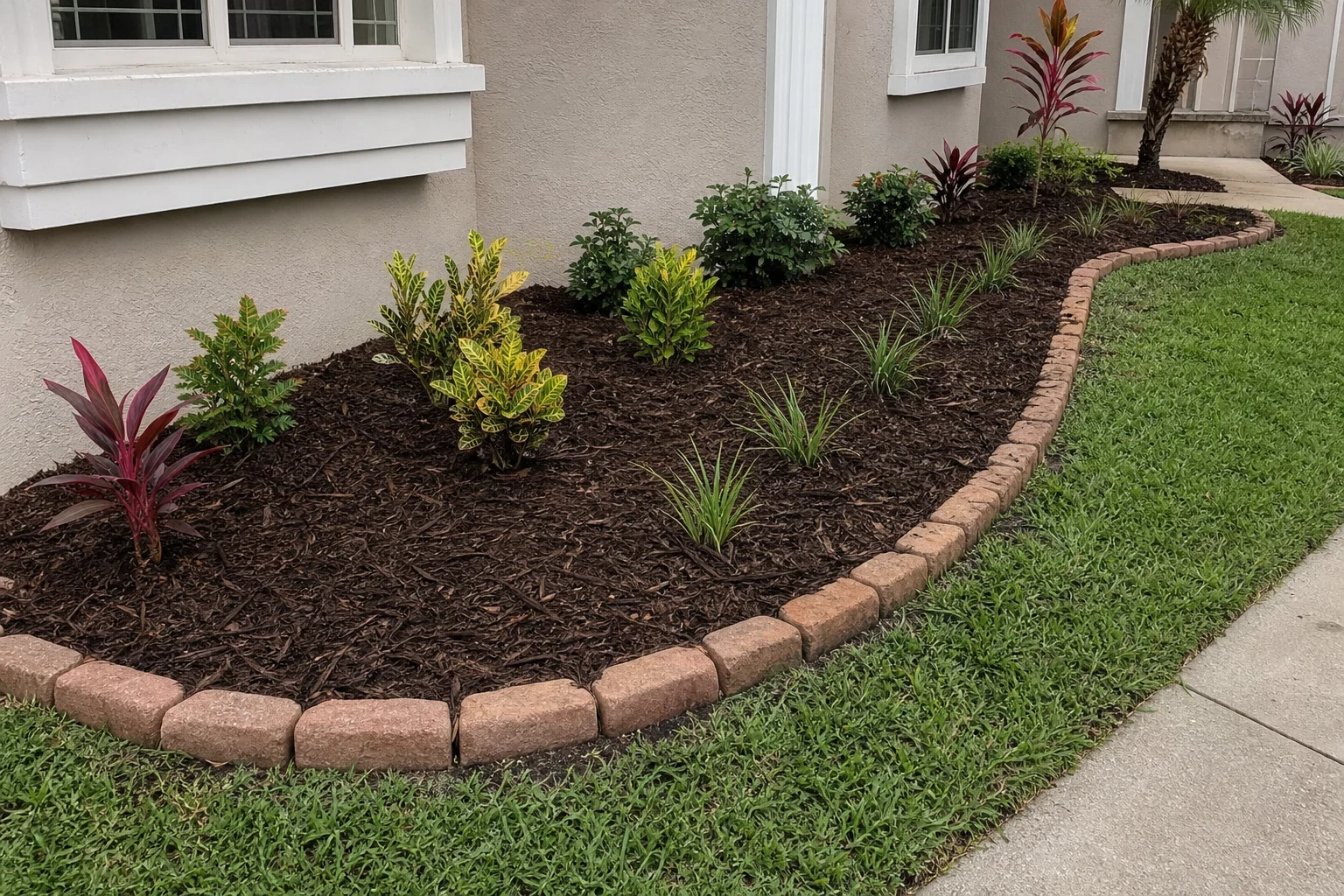
Beds that look good and work harder
Mulch does more than cover dirt. A proper layer shades the soil, slows evaporation and keeps roots cooler on a hot afternoon. That means your plants stress less and your irrigation can run shorter cycles, which shows up on the water bill.
Florida mulch breaks down fast. Heat, humidity and summer downpours turn a fresh layer thin and patchy within a year, and our sandy soil drains so quickly that bare spots dry out in hours. We refresh beds on a schedule that fits how quickly your mulch is disappearing, not on a guess.
This service suits you if your beds look faded, weeds keep winning, or you want new beds shaped around your home. If you are planning a bigger change in layout or plantings, our landscape design page covers that work.
What our mulch and bed service includes
Weeding down to the root
We pull weeds by hand and remove runners from grasses creeping in from the lawn. Covering weeds with mulch only hides them for a few weeks.
Clean, defined edges
We cut a sharp edge between lawn and bed so turf stays out and mulch stays in. It is the detail that makes a bed look finished from the street.
Mulch or pine straw, your choice
We lay pine bark, cypress-style hardwood, eucalyptus or pine straw. We will tell you how each one holds up, whether it floats in heavy rain, and how often it needs topping up.
The right depth, kept off trunks
We spread two to three inches, enough to block light from weed seeds without smothering roots. We pull mulch back from tree trunks and keep it below siding and away from the foundation.
Bed shaping and new beds
We can reshape awkward beds or cut new ones, such as a planted strip along a sunny wall. Shrubs on the west side of your home can shade walls and windows as they grow.
Cleanup when we leave
We blow off walks, driveways and patios and haul away weeds and old debris. You walk out to finished beds, not a mess.
Signs your beds need attention
You can see bare soil
Once the layer is thin enough to see dirt, it has stopped holding moisture or blocking weeds. Exposed sandy soil heats up and dries out quickly.
Weeds keep coming back
If you pull weeds every weekend, the mulch is too thin or the edges have failed. Fixing both cuts down the work for months.
Mulch piled against trunks or walls
Volcano-style mounds around trees hold moisture against bark and invite rot. Mulch packed against siding can give pests an easy path toward your home.
Plants wilt between waterings
Shrubs that droop by mid-afternoon often sit in beds that lose water too fast. A fresh layer can help them go longer between cycles.
Lawn and beds have blurred together
When grass has crept into the beds, the clean line is gone and turf competes with your shrubs for water.
How a mulch and bed job runs
- 1
Walk the beds with you
We come out, look at every bed, check the depth of what is there and ask what you want. You get a clear estimate before any work is scheduled.
- 2
Prep the beds
On the day, we weed, cut edges and rake out matted or moldy old mulch where it has built up too deep. We check that sprinkler heads in the beds are visible and not buried.
- 3
Lay the new layer
We spread mulch or pine straw evenly to the agreed depth, working it around plants and away from trunks and walls.
- 4
Clean up and walk through
We clear hard surfaces, haul off debris and walk the finished beds with you if you are home. We will also mention when we expect the beds to need a refresh.
What affects the cost of mulch and bed work
Most of the price comes from how much material your beds need and how much prep they need first. We measure on the walkthrough and give you a written estimate with labor and materials shown separately. When bed work is part of a bigger project, you can spread the cost with our financing: amounts up to $100,000, terms anywhere from 2 to 12 years, and no penalty if you pay it off early.
- Bed size and depth
- Square footage and how thin the current layer is set how much material we bring. Topping up costs less than starting from bare soil.
- Material type
- Pine straw, pine bark and hardwood mulches differ in price and in how long they last before breaking down.
- Weeds and old mulch
- Heavily overgrown beds or thick, matted layers that must come out first add labor time.
- Edging and new beds
- Cutting fresh edges or shaping new beds is extra work beyond a simple refresh.
- Access
- Beds behind fences or far from the driveway mean more trips with wheelbarrows.
Mulch and bed questions
Something not covered here? (407) 986-0087
How often should my beds be re-mulched?
In our heat and rain, most beds need a top-up about once a year, and pine straw can fade sooner. Shady beds hold up longer than ones in full sun. We look at your beds and tell you honestly if they can wait.
Does mulch really help with watering?
Yes. A two- to three-inch layer shades the soil and slows evaporation, so moisture stays around roots longer. That can let you shorten irrigation run times, especially during the dry spring months. Our irrigation page covers adjusting your system to match.
Which mulch works best here?
Pine straw stays put on slopes and is light to spread. Pine bark nuggets look tidy but can float during heavy storms, so shredded mulches suit low spots better. We will recommend what fits each bed instead of one product for everything.
Will new mulch attract termites?
Mulch does not draw termites by itself, but a thick pile against your foundation keeps the area damp and hides activity. We keep a gap between mulch and your walls so the slab edge stays visible and dry.
Do you remove the old mulch first?
Usually we add on top, since old mulch turns into useful organic matter. When layers have built up too deep or turned matted, we rake some out so the total depth stays healthy for your plants.
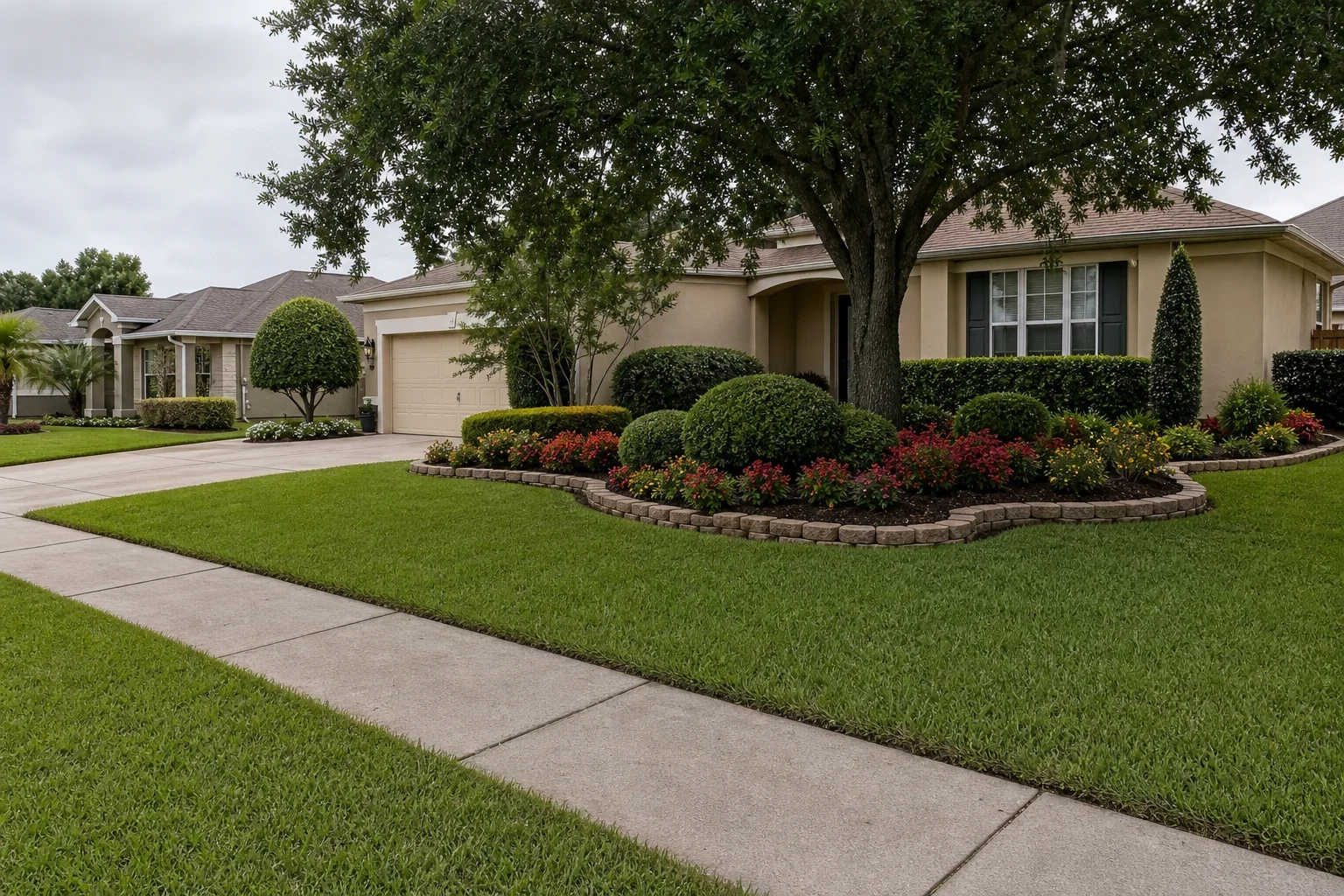
Ready for beds you don't have to fuss over
We will come out, look at each bed and give you a free estimate on the spot. You will know the material, the depth and the price before anything is scheduled.