ServicesLawn Care
Lawn Care in Ocoee
We mow, edge, feed and treat your lawn on a steady schedule, at the height and timing your grass actually needs. A thick lawn shades its own soil, holds water longer and keeps the ground around your home cooler. It is less work for you and less waste on your water bill.
Lawn care built around your grass, not a calendar
Most lawns here are St. Augustine, Bahia or Zoysia, and each one wants something different. St. Augustine thins out and invites weeds when it is cut short. Bahia sends up seed heads all summer. Zoysia needs a sharp reel or rotary blade or it tears and browns at the tips. We start by figuring out what you have and how it is doing.
Then we keep it on a schedule that follows the seasons. Mowing ramps up in the rainy months when grass can grow an inch or more a week, and slows in the cooler, drier stretch. Feeding and weed treatments go down when the turf can use them and when local fertilizer rules allow.
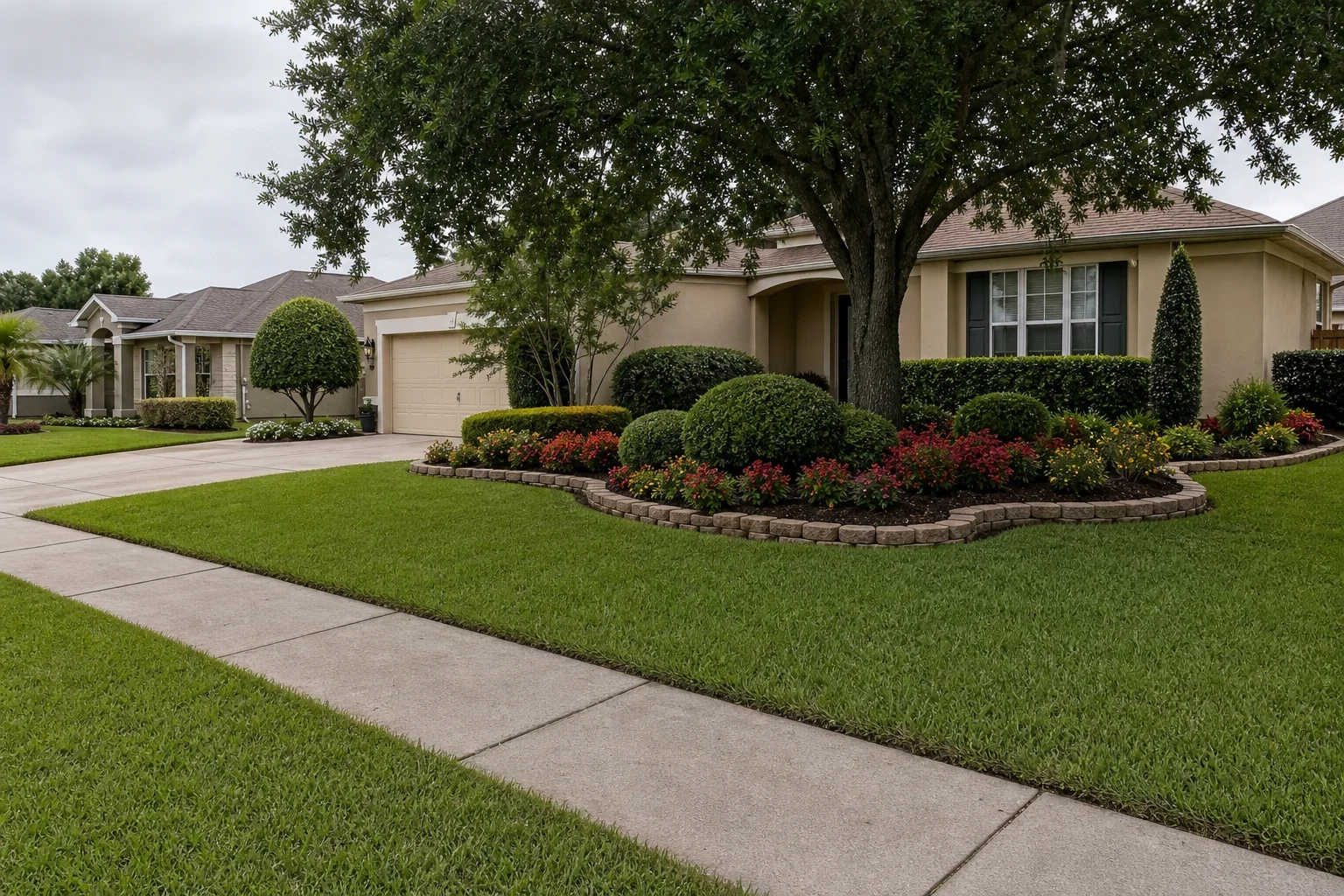
There is a practical payoff beyond curb appeal. Grass kept at a healthy height grows deeper roots and shades the sandy soil underneath, so it dries out slower and needs less irrigation. Healthy turf next to your house also stays noticeably cooler underfoot than bare sand or patchy dirt on a July afternoon.
What our lawn care includes
Mowing matched to your turf
St. Augustine and Bahia both do better left taller than most people expect, so we adjust the mower to suit the grass in your yard. We sharpen blades often, which gives a clean slice across each leaf rather than a ragged tear.
Edging and trimming
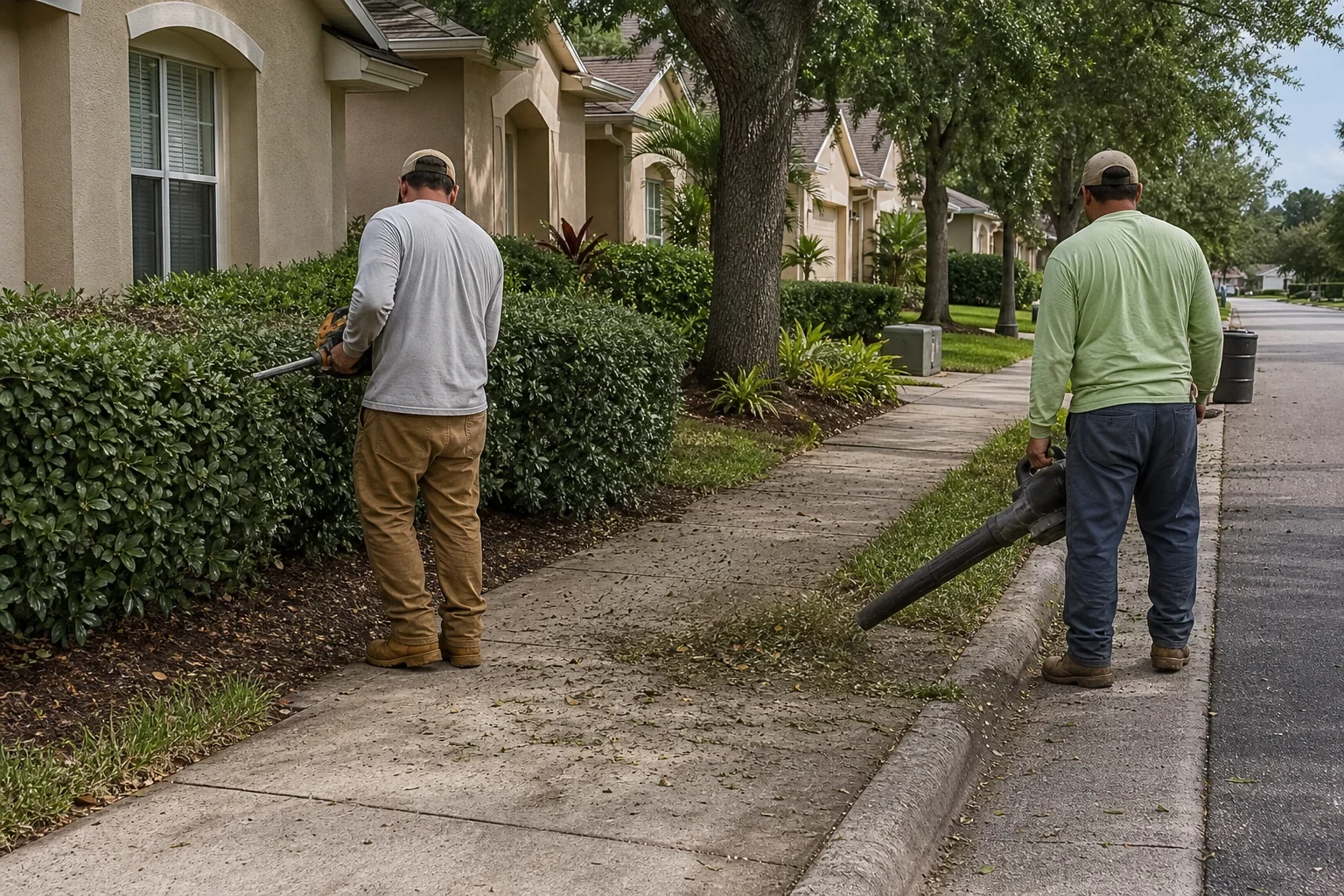
Clean edges along driveways, walks and beds, plus string trimming around fences, trees and the AC unit. We keep clippings and debris off your hardscape.
Seasonal fertilizing
Slow-release feeding timed to the growing season and in line with local fertilizer restrictions. More food is not always better, and we will tell you when the lawn does not need it.
Weed control
Spot treatments for sedge, dollarweed and broadleaf weeds, plus pre-emergent applications before the spring and fall flushes. Where weeds point to a bigger cause, like overwatering, we say so.
Insect and disease checks
We look for chinch bug damage in hot, dry spots and brown or large patch fungus in cooler, wet weather. Catching these early is the difference between a small treatment and replacing turf.
Watering advice
We look at how often and how long your sprinklers run and suggest changes. If heads are broken or spraying the driveway, our irrigation service can handle the repair.
Signs your lawn needs regular care
Yellow or straw-colored patches
Dry, spreading patches in full sun during summer are often chinch bugs, not drought. Watering more will not fix them.
Dollarweed taking over
Those round, shiny leaves love constant moisture. They usually mean the lawn is being watered too often, which also means you are paying for water the grass does not need.
Thin grass and bare sand
When turf thins out, the soil heats up, dries quickly and weeds move in. A lawn that is scalped by low mowing is the most common cause.
Brown, ragged tips after mowing
A whitish or brown cast a day after a cut points to a dull blade tearing the grass. Torn tips lose more water and pick up disease more easily.
You are always catching up
If the lawn gets away from you every rainy season, a steady schedule keeps it manageable and saves the stress of one big, rough cut.
How we get your lawn on track
- 1
Walk the property with you
We come out, look at the grass, the soil, the shade and your sprinkler coverage, and listen to what bothers you about the yard. The walkthrough and estimate are free.
- 2
Give you a clear plan
You get a written estimate showing visit frequency and which treatments are included, with nothing bundled in that you did not ask about. If the lawn is too far gone to save in spots, we tell you plainly and talk through options like sod installation.
- 3
Show up on a regular schedule
Our crew mows, edges, trims and blows off your walks and driveway each visit. Gates get closed and we work around pets, kids' toys and garden beds.
- 4
Adjust as the seasons change
We change mowing frequency, feeding and treatments through the year and let you know what we are seeing, like a chinch bug hot spot or a dry zone that needs a sprinkler fix.
What affects the cost of lawn care
Lawn care is priced per visit or per season, depending on what you choose. The biggest factors are the size of the lawn and how much is included beyond mowing. We put every item on your estimate so you can see what you are paying for and drop anything you do not want.
- Lawn size and layout
- More square footage takes more time. Lots with slopes, tight side yards or many beds and trees to trim around take longer than an open rectangle.
- Visit frequency
- Weekly cuts in the rainy season cost more over a year than every-other-week service, but they keep the grass from getting stressed by heavy cuts.
- Treatments included
- Fertilizing, weed control and insect treatments add to the price of basic mowing. We recommend only what your lawn shows a need for.
- Starting condition
- An overgrown or weed-heavy lawn may need a cleanup visit or extra treatments before regular care makes sense. Our seasonal cleanup or property cleanup services can reset the yard first.
Lawn care questions we hear often
Something not covered here? (407) 986-0087
How short should my St. Augustine grass be cut?
Usually around 3.5 to 4 inches. Taller grass shades the soil, grows deeper roots and crowds out weeds. Cutting it short to stretch time between mowings tends to backfire with thin, stressed turf.
Can lawn care really lower my water use?
It can help. A thick, properly mowed lawn holds moisture longer, and adjusting run times often cuts back on wasted water. Most of the savings come from not overwatering, which we will point out when we see it.
Do I have to sign up for a year?
No. We will talk through a schedule that fits your yard and your budget when we walk the property. You can start with mowing only and add treatments later if the lawn needs them.
Will you leave the clippings on the lawn?
On regular cuts, yes. Short clippings break down quickly and return nutrients to the soil. We blow them off walks, driveways and patios so nothing is tracked into your home.
What if my lawn is mostly dead?
We will give you an honest answer on whether it can recover with care or whether new sod is the better spend. Sometimes a mix works, with sod in the worst areas and regular care for the rest.
Let's take a look at your lawn
We will walk your yard with you, explain what we see and give you a free estimate for a schedule that fits. No pressure and no surprises on the price.