ServicesHardscape Installation
Hardscape Installation in Ocoee
We build paver patios, walkways, borders and low garden walls that drain well, stay level and stay cooler underfoot in the summer sun. We start with a walk around your yard, talk through how you want to use the space, and give you a clear written estimate.
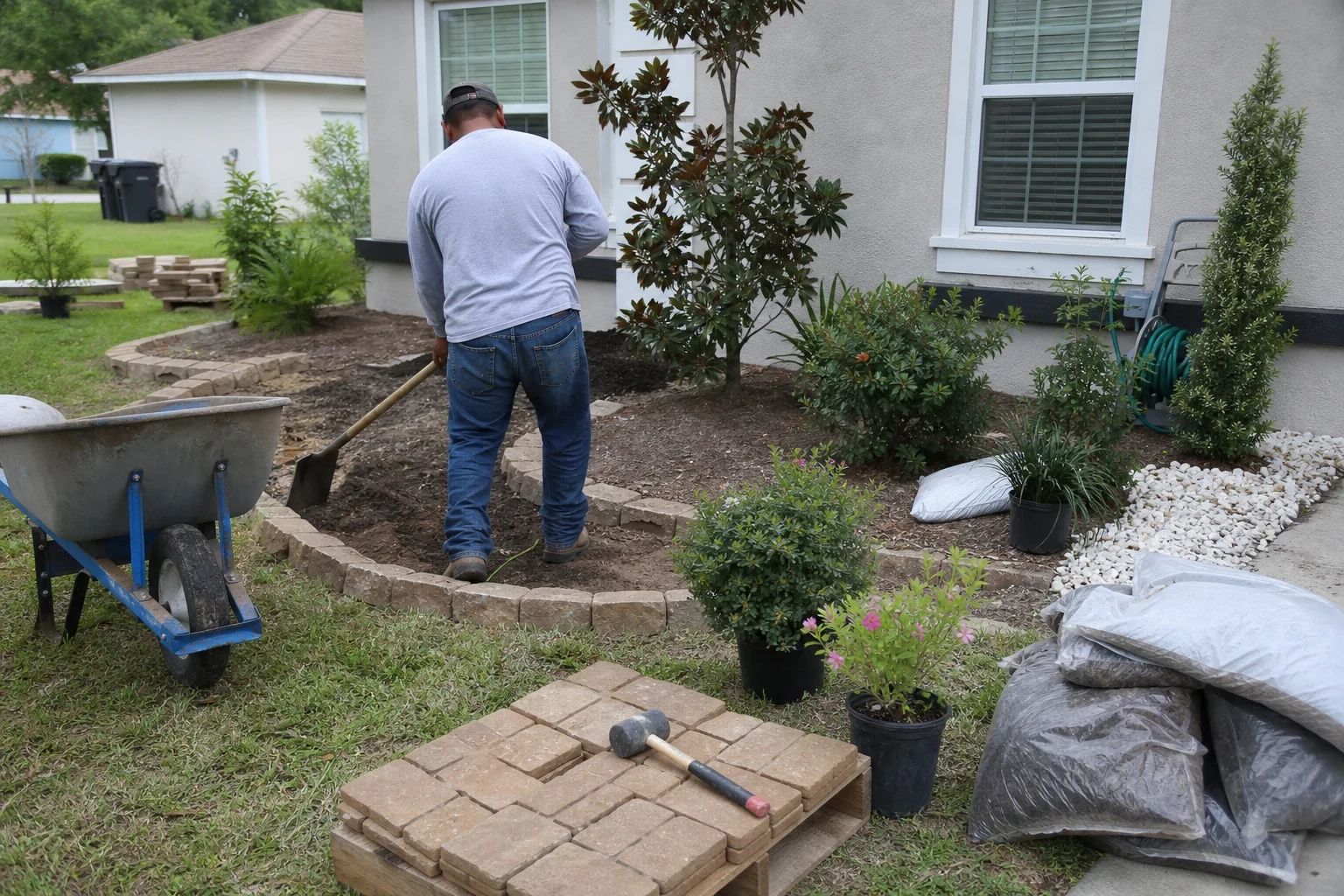
Outdoor Space You Can Actually Use
Hardscape is the solid part of your landscape: patios, paths, edging, steps and small retaining walls. Done well, it gives you a place to sit, a dry path to the side gate and beds that hold their shape. Done poorly, pavers sink, puddles form against the house and weeds push up through every joint.
Most of the work you never see. Florida's sandy soil shifts when it gets soaked, so we dig out, lay a compacted base in layers, set edge restraints and slope every surface away from your home. That base is what keeps a patio flat for years.
We also think about comfort. Light-colored pavers and travertine reflect more sun than dark concrete, so they are easier on bare feet and give off less heat toward nearby walls and windows. Swapping a thirsty patch of struggling grass for a patio or gravel path can also trim what you spend on watering.
What Our Hardscape Work Covers
Paver patios
Concrete pavers, travertine or brick set in the pattern you choose. We size the patio around how you will use it, from a small bistro table to a full outdoor dining area.
Walkways and garden paths
Paver walks, stepping stones or gravel paths that connect the driveway, front door, side yard and patio. We keep them wide enough to walk side by side or roll a trash can.
Low retaining and seat walls
Segmental block walls that level a slope, hold back a raised bed or double as extra seating around a patio. Each one gets a gravel footing and drainage behind it so water does not build up.
Edging and bed borders
Paver, stone or metal edging that keeps mulch in the beds and grass out of them. It pairs well with our mulch and beds service.
Fire pit areas
A circle of pavers or a block fire pit with a gravel or paver surround, placed a safe distance from the house, fences and overhanging branches.
Drainage built in
Correct slope, gravel channels and catch basins where needed, so rain moves off the hardscape and away from your foundation instead of pooling.
Signs Your Yard Is Ready for Hardscape
Worn dirt paths
If everyone cuts the same line across the lawn, grass will never win there. A walkway in that spot looks intentional and stops the mud.
Puddles near the house
Water that sits against your slab after a storm is a problem worth fixing. A new patio or path can be graded to send that water away.
A patio that has sunk or cracked
Old concrete slabs crack and settle, and dark surfaces can get too hot to stand on in July. Replacing them with pavers on a proper base gives you a cooler, level surface.
Grass that will not grow
Deep shade, roots and foot traffic kill turf no matter how much you water it. Hardscape in those spots saves water and ends the cycle of reseeding.
A slope that washes out
If mulch and soil end up on the sidewalk after every rain, a low retaining wall can level the area and hold it in place.
How a Hardscape Project Runs
- 1
On-site walkthrough
We come out, look at your yard, note slopes, drainage, utilities and tree roots, and listen to how you want to use the space. We bring material samples so you can see colors in your own light.
- 2
Written estimate and plan
You get a line-item estimate with the layout, materials and base depth spelled out. If your HOA needs to approve the project or the city requires a permit, we tell you up front and help with the paperwork.
- 3
Excavation and base
We protect your lawn and driveway, call in utility locates, dig to the right depth and compact the base in layers. This is the step that decides how long your patio stays flat.
- 4
Laying and finishing
Pavers or block go down, edges get cut clean, restraints are pinned and joints are filled with polymeric sand. A larger patio usually takes a few working days.
- 5
Cleanup and walk-through
We haul off soil and scraps, rinse the surface and walk the finished work with you. We also explain simple care, like when to top up joint sand.
What Affects the Cost of Hardscape
Every hardscape job is priced from the measurements and site conditions we see on the walkthrough. Your written estimate lists each part so you know exactly what you are paying for. If you would like to spread out the cost of a bigger project, we offer financing up to $100,000, repaid over anywhere from 2 to 12 years, and paying it off early never costs you a penalty.
- Square footage and layout
- The overall area is the biggest piece of the price. Curves and detailed patterns take more cutting and labor than a simple rectangle.
- Material choice
- Standard concrete pavers, travertine, natural stone and block walls all price differently. We can show you options at different levels side by side.
- Site prep and access
- Removing an old slab, grading a slope or working around roots adds time. Tight side yards where equipment cannot fit mean more work by hand.
- Drainage needs
- Yards that hold water may need extra grading, gravel channels or catch basins to keep water away from your home.
- Walls and extras
- Retaining walls, steps, seat walls and fire pits each add materials and labor on top of the flat surface.
Hardscape Questions We Hear Often
Something not covered here? (407) 986-0087
Pavers or poured concrete, which is better?
For most patios we recommend pavers. They flex slightly as the sandy soil moves, so they are less likely to crack, and a single damaged paver can be lifted and replaced. Concrete can cost less up front, but cracks are hard to repair neatly.
Will a patio really feel cooler?
Color makes a real difference. Light pavers and travertine absorb less sun than dark concrete, so they are more comfortable to walk on and radiate less heat toward the walls and windows next to them. Pairing the patio with shade trees from our landscape design work helps even more.
How long until we can use the new patio?
You can usually walk on it as soon as we finish. Polymeric sand needs dry weather to set, so we ask you to keep heavy furniture and hoses off for a day or two after installation.
Do I need a permit or HOA approval?
Many neighborhoods have an HOA that wants to review hardscape plans, and some walls or larger projects may need a city permit. We check this during the estimate and help you put together drawings and material details for approval.
How do you stop weeds and ants in the joints?
We fill joints with polymeric sand, which hardens when wet and resists weeds and insects far better than loose sand. A well compacted base and solid edge restraints also keep joints from opening up over time.
Will my lawn and sprinklers be damaged?
We plan the route for equipment, protect turf where we can and mark sprinkler heads before digging. If lines need to move for the new layout, our irrigation service can reroute them so the patio stays dry and the lawn still gets coverage.
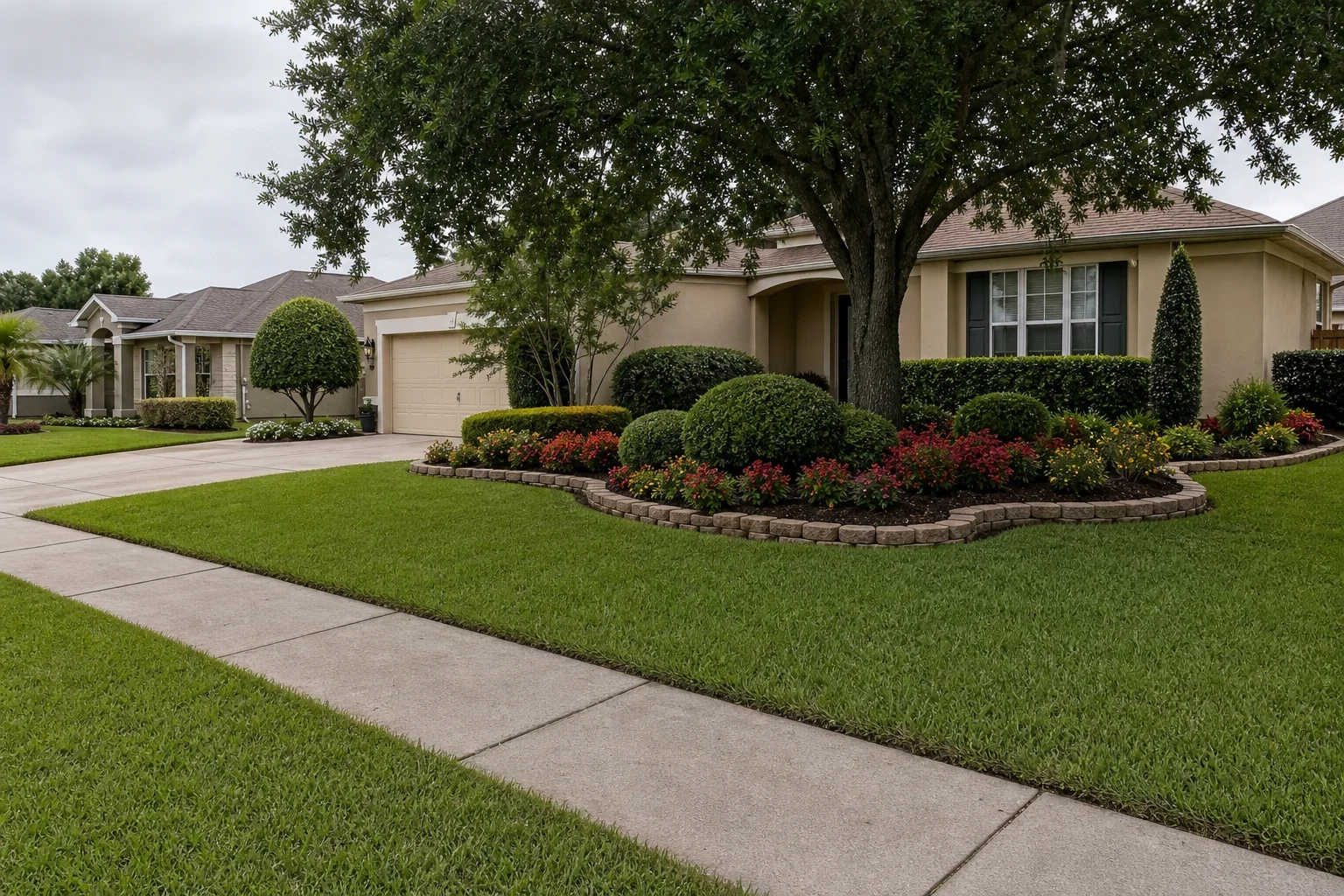
Let's Plan Your New Patio or Path
Tell us what you have in mind and we will come look at the space, take measurements and walk you through materials. You will get a free, written estimate with no pressure to decide on the spot.